Here’s a conversation that we ought to be having in Canada about our energy future (but aren’t—at least not yet): How do we show up in the energy transition—globally and at home—in the coming decades?
As a country, we have an abundance of fossil fuel resources.
We also have an abundance of clean and renewable energy resources, and the critical minerals needed for the technologies that harness and capitalize on them.
We are in a relatively unique position to choose: petro-state or electro-state?
As Anne-Sophie Corbeau & Tatiana Mitrova write: “What is emerging are two competing models of energy and influence—one anchored in the enduring logic of hydrocarbons, the other in the accelerating promise of electrification. At stake is not just the future of energy systems, but the contours of geopolitical power in the decades ahead.”
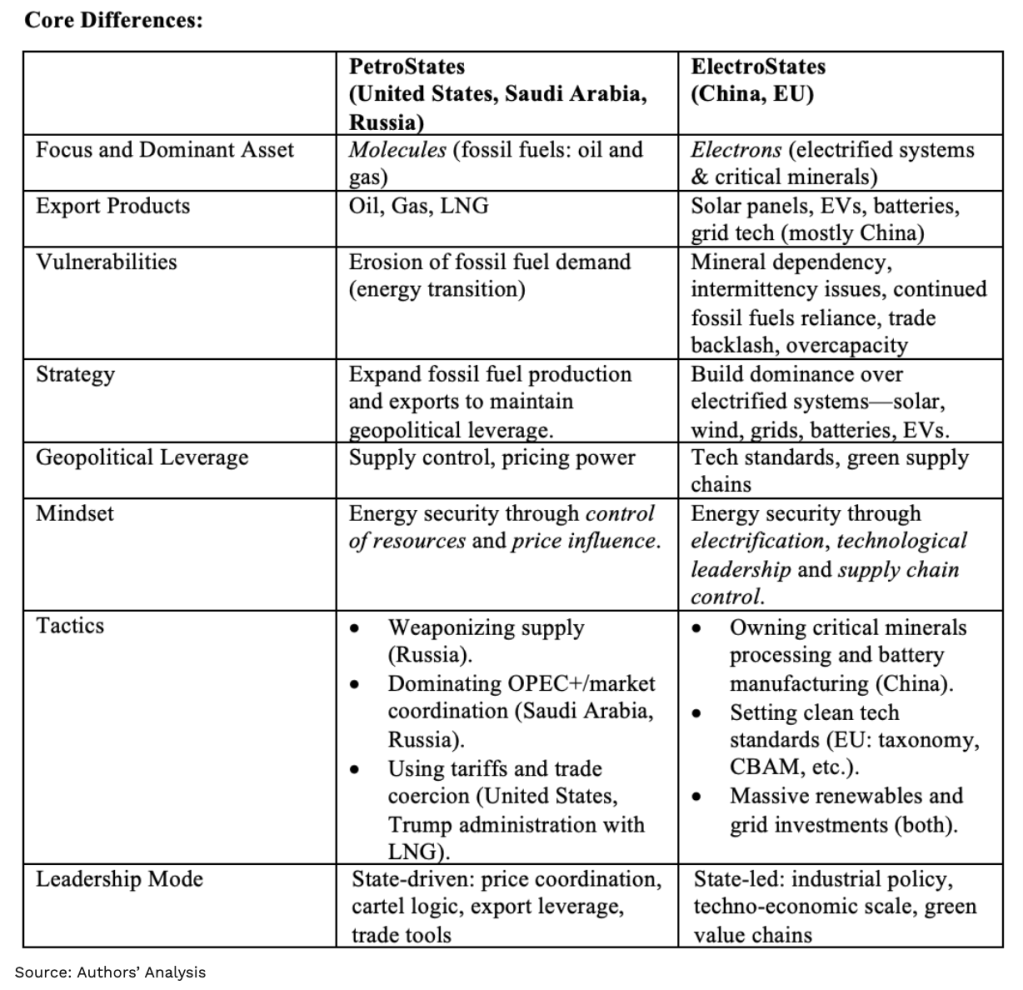
The stakes, as articulated by Kingsmill Bond Daan Walter & Sam Butler-Sloss, are clear:
“The electrotech revolution isn’t all sunshine and opportunity—there are serious risks to falling behind. While future energy systems may no longer depend on fuel, they will depend on software, control systems, and digital infrastructure. If countries don’t develop those themselves, they’ll end up reliant on others—and vulnerable to them…We’ve entered an era defined by technological competition and energy security. By focusing on electrotech now, countries and companies can navigate the instability of the coming decade with greater resilience. And in doing so, they also lay the foundation for long-term stability, free from climate disaster.”
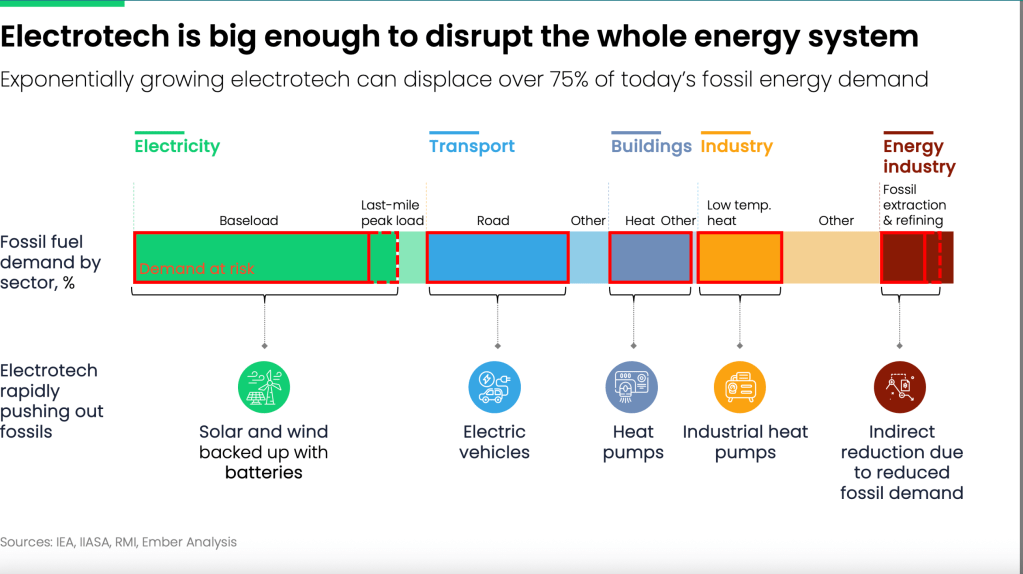
As I’ve previously written, “Some argue the transition to clean energy will be slow. They would prefer policymakers focus on enabling increased production and use of Canada’s oil and gas resources, citing ever-growing global demand. But increasingly, energy analysts are forecasting a future, based on current market trends, that paints a very different picture with sweeping implications for Canada….The risk to Canada, then, is that we continue to pay short shrift to the opportunities at hand—in critical minerals, batteries and other technologies, and clean and renewable electricity—in favour of trying to prop up the viability of our oil and gas sector. That we focus on the sunset, rather than the sunrise.”
This won’t be an easy conversation, but it’s a necessary one.
We should stop avoiding it.
 Polaris Strategy + Insight