How many times will Canadians pay for our dependence on gasoline and diesel—not just at the pump, but through higher interest rates?
Here’s the lesson from yesterday’s Bank of Canada decision to raise its rate: Our dependence on gasoline and diesel doesn’t just leave Canadians vulnerable to higher prices at the pump. It can also mean higher mortgage payments.
The Bank of Canada’s analysis has made the connection explicit (see Figure 1). Persistently high oil prices are driving inflation and raising costs across the economy, prompting it to increase interest rates to prevent those pressures from spreading further.
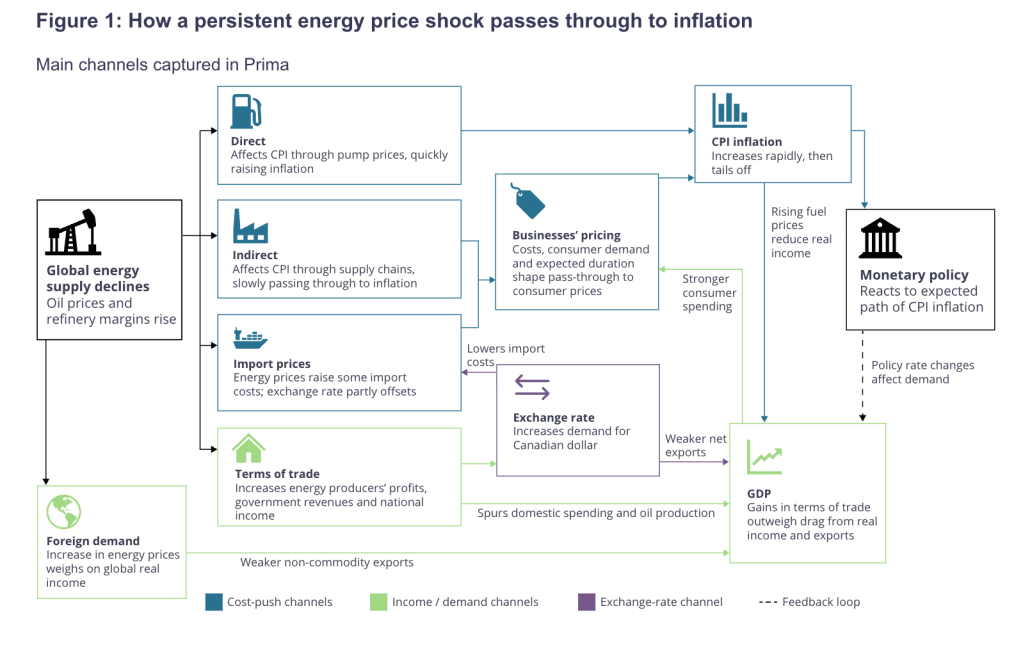
This is consistent with a recent Scotiabank analysis that found that higher diesel prices will amplify “the inflationary impulse in both Canada and the United States. Importantly, the effect is not confined to energy prices. There is evidence of pass-through to broader prices, with the effects appearing gradually in categories such as food and shelter.” Things will likely get worse before they get better.
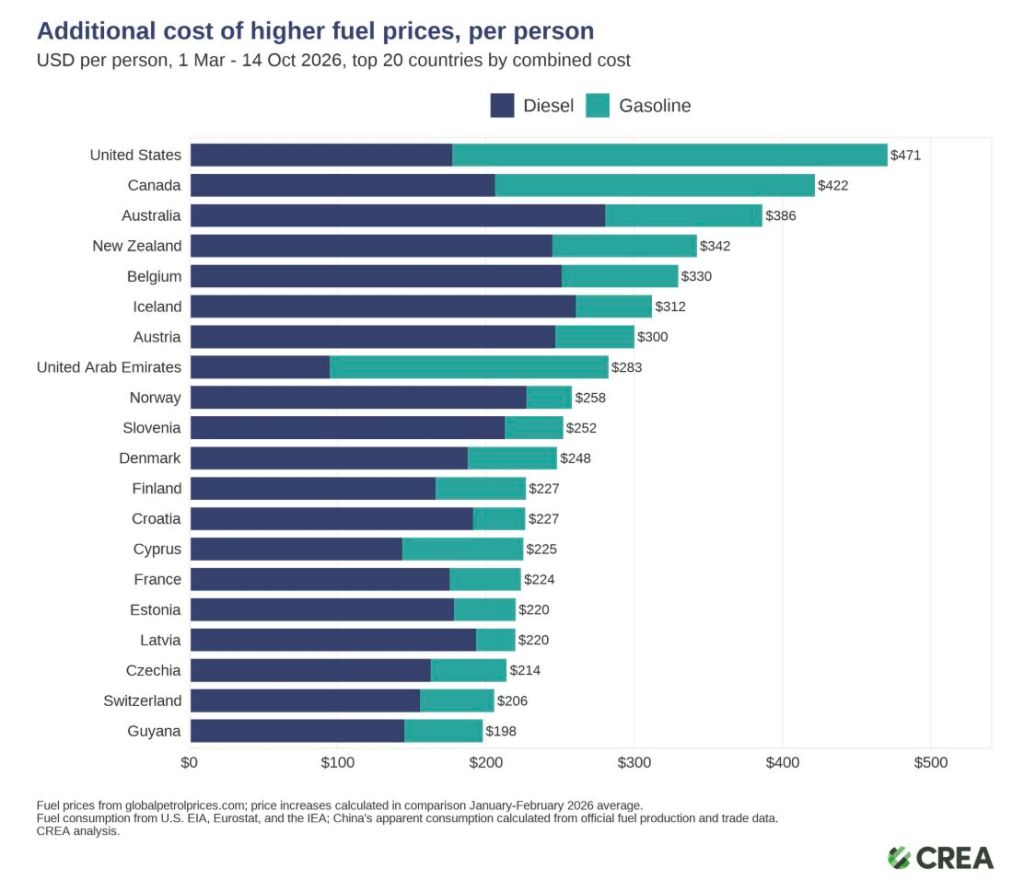
This is hardly the first time we’ve experienced this dynamic. And being a major oil producer and exporter hasn’t insulated Canadian consumers from it. In fact, a new international analysis estimates that Canadians and Canadian businesses have paid approximately $24 billion more for gasoline and diesel since the conflict in the Middle East began—roughly $575 per Canadian (n.b. the graph below shows prices in $US).
Now some Canadians are paying more on their mortgages, too.
We cannot control geopolitical conflicts or global oil prices. But we can control how dependent we remain on them.
Accelerating the electrification of transportation—cars, trucks and buses—isn’t just about reducing emissions. It’s about protecting Canadians from future oil-price shocks, reducing inflationary pressures, and making our economy more resilient.
Electrification won’t eliminate these risks overnight. But the sooner we reduce our dependence on gasoline and diesel, the less exposed we’ll be when the next oil-price shock inevitably arrives.

