As I recently wrote, there’s a clear lesson from the Bank of Canada’s recent decision to raise its rate: Our dependence on gasoline and diesel is an economic vulnerability, and not just at the pump. Unfortunately, relief isn’t on the horizon: Morgan Stanley predicts that oil-product markets will remain tight until at least mid-2027, and Goldman Sachs flagged that global shipping costs for oil have risen ~7x over the past year and are expected to remain high.
These higher prices have an immediate impact, but also a longer-term impact as they cascade through the economy. An analysis by Scotiabank explored how higher diesel prices extend beyond the pump and spread through freight, production, and distribution networks before ultimately reaching consumer prices. Yes, you’ll see this showing up in prices at your local grocery store in the coming months.
Importantly, they find that this pass-through is gradual and persistent: “Transportation prices respond first, while pressures in food, shelter, and other categories build with a 12-to-18-month lag as higher costs work their way through the supply chain. A longer-lasting shock would increase the risk of broader inflation pressure and a stronger monetary policy response.”
While there isn’t a quick fix to this vulnerability, China is showing us the mid- to long-term escape route: electrifying trucks.
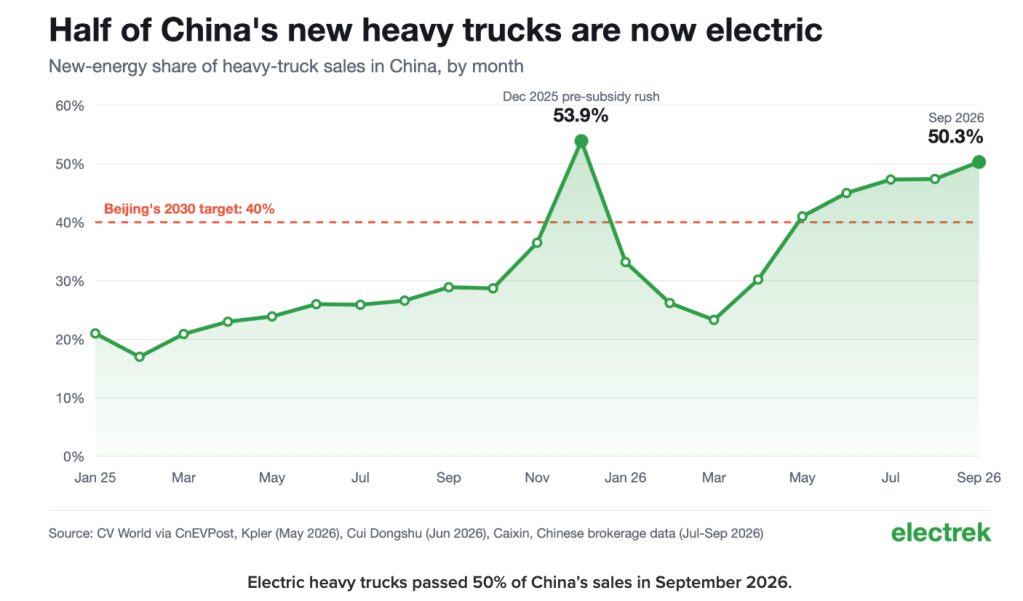
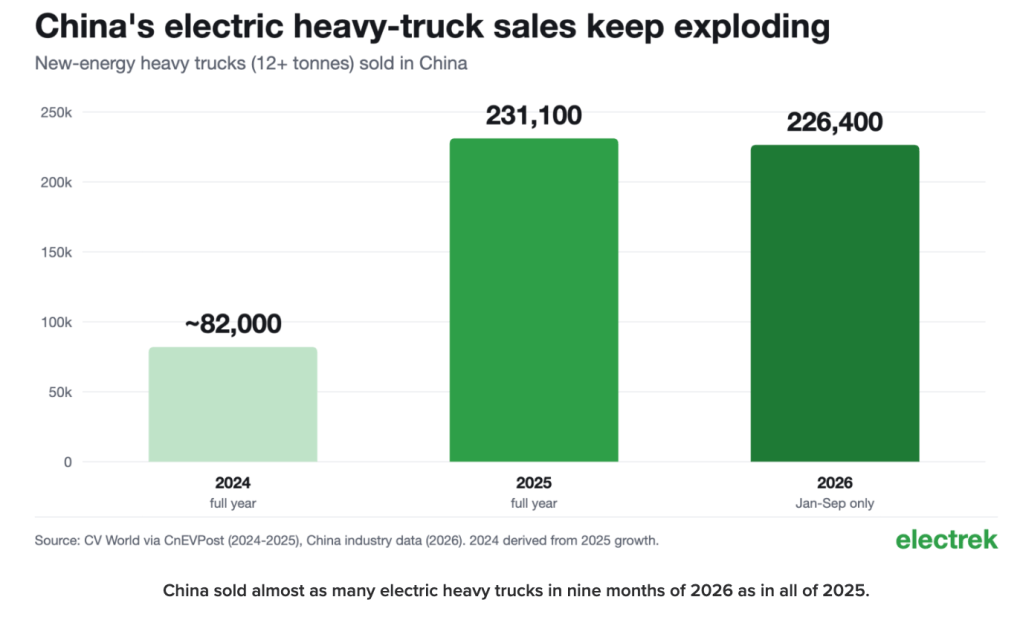
“Through the first nine months of 2026, China sold 226,400 electric heavy trucks, up 64%, for a 38.1% share….In tractors, the big rigs that pull long-haul trailers, the September share hit 64.5%…In most uses, an electric heavy truck in China is now cheaper to own and run than a diesel one, and fleets run that math every day…China’s diesel consumption already peaked…2026 is the steepest drop yet. Kpler estimates diesel demand fell about 420,000 barrels per day year-over-year in May, roughly 10%, and 460,000 in June. It expects a decline of about 230,000 barrels per day for the full year and only a 64,000 barrel-per-day rebound in 2027.”
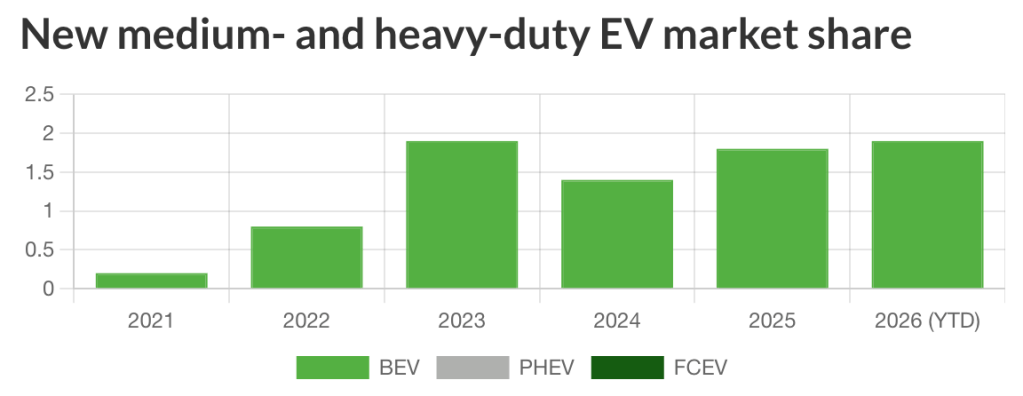
In contrast, Canada lags way, way behind in shifting towards electric medium and heavy-duty vehicles (MHDVs). Year-to-date market share is a measly 1.9%.
There’s been no shortage of good advice on how to advance electrification of MHDV fleets (see here, here, and here, for example), but relatively little—and inconsistent—policy and programmatic support. At present, the response to high diesel prices has been to pause the federal excise tax, which offers near-term relief but does nothing to address this ongoing economic vulnerability (it arguably perpetuates it by dampening a market signal that might otherwise drive change).
When it comes to the accelerating electrification of transportation, North America is increasingly an outlier. Most media coverage and punditry has its eyes fixed on the rearview mirror, not the road ahead.
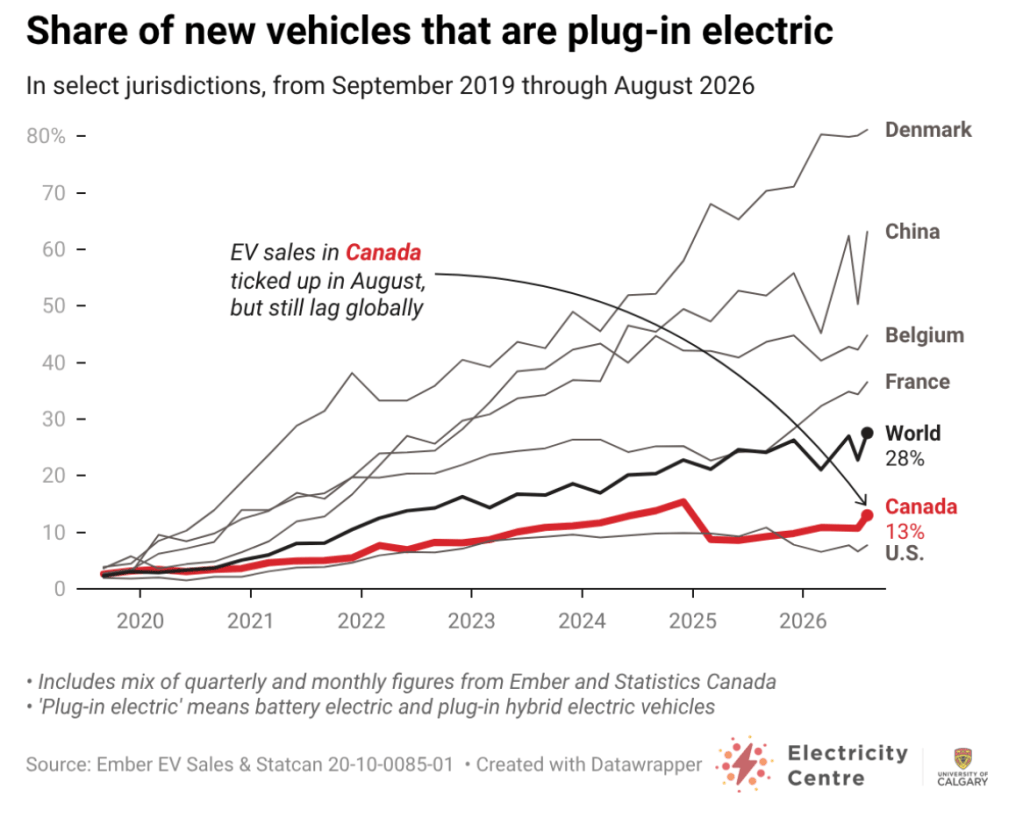
In its most recent newsletter (sign up here!), the University of Calgary’s Electricity Centre puts it plainly: “North America now finds itself at a crossroads: Will governments adopt the kinds of policies that have catalyzed rapid EV growth elsewhere in the world? Will market forces, on their own, have enough power to push things past the tipping point? Or will the continent continue to lag behind the rest of the world?”
Once thought of primarily through the lens of decarbonization, it’s evident that the shift to electrification offers much more than less climate pollution, it delivers energy security, economic stability, and affordability.
Let’s talk more about that.

